
World
A Peg Is Paid for in Reserves, Until It Isn’t
The promise sounds absolute—10 units of local currency for one dollar, every day, no exceptions.
The Drewry World Container Index reports the Shanghai–Rotterdam rate at $3,125. That price buys you one 40ft container, one lane, one sailing — and not much else. The bill for moving that box, once the terminal clocks start ticking, will land higher. Sometimes much higher. The gap between an index quote and an invoiced sum is not a mystery.
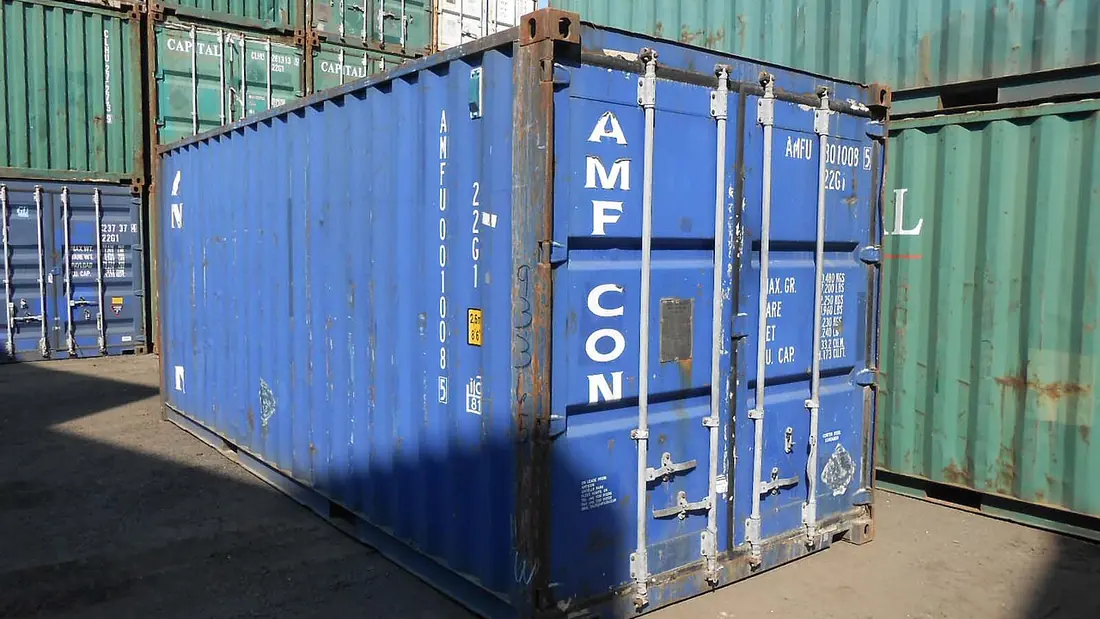
It is two separate arithmetic problems: the rate for the ocean move, and the price of time on two distinct pieces of equipment that begin charging the moment the ship ties up.
Container spot indices — the numbers that move stock prices and trade-policy briefs — are compiled weekly from live transactions. The Drewry World Container Index pulls its data from freight forwarders and non-vessel-operating common carriers based in Europe, North America and Asia. It publishes eight route-specific indices, such as Shanghai–Rotterdam and Los Angeles–Shanghai, plus a composite figure that weights them. All are quoted in US dollars per 40ft container. The Freightos Baltic Index (FBX) works differently: it aggregates anonymized real-time pricing from carriers, forwarders and high-volume shippers transacting on the WebCargo platform. Its values are the median price across all transactions, with weighting by carrier, and the underlying prices are rolling short-term Freight All Kind (FAK) spot tariffs and their attached surcharges.
Both indices report what was actually agreed, not what was offered. Drewry explicitly excludes quotes, tariffs, estimates, bids and offers; only rates on cargo that has moved or is expected to move make the cut. FBX filters for real business the same way. A number on the screen is a snapshot of a lane on a specific day, not a guarantee for next week, not an all-in price, and not what you pay if your container lingers at the dock.
The index is a spot measure, which means it samples an agreement that is about to expire almost as soon as it is struck. Drewry restricts its sample to rates with a validity of no fewer than 7 calendar days and no more than 30 calendar days from the assessment date. That is a deliberate short-term window. A rate locked for a year under a service contract never reaches the index. A quote that a forwarder sent yesterday morning but that has not been accepted also never appears. The same logic operates on the FBX side, where the data stream is rolling short-term FAK spot tariffs, not multi-month deals.
What the index includes is the ocean freight rate for a container moving between two named ports. It does not include trucking at either end, customs brokerage, cargo insurance, or storage charges that start building the moment the box hits the terminal. Some surcharges — bunker, peak-season — are folded into the FAK figure in the FBX; whether they survive inside the Drewry headline is less transparent, because the methodology page does not line-item every add-on. A small importer will quickly discover that the clean number on the screen is the floor, not the ceiling.
The index is also an average of large-scale behaviour. Drewry’s panel is intermediaries. Freightos’s data comes from high-volume shippers and forwarders. A buyer moving ten containers a year typically pays more than the median, not less. The index tells you where the market cleared that week. It does not tell you what any specific desk paid.
Until February 2024, the billing rules for the charges that pile up after discharge were a tangle of carrier practices and contractual small print. On 23 February 2024 the Federal Maritime Commission issued a final rule on detention and demurrage billing practices, published in the Federal Register three days later as 89 FR 14330. That rule rearranged the incentives overnight.
The core requirement is time. A billing party must issue a demurrage or detention invoice within 30 calendar days from the date on which the charge was last incurred. Miss the window and the bill cannot lawfully be sent. The invoice must also go to exactly one party. The rule says it may be issued only to the person for whose account the ocean transportation or storage is provided and who contracted with the billing party, or to the consignee — the ultimate recipient of the cargo. Carriers cannot simultaneously bill a forwarder and the beneficial cargo owner. And the commission made the most powerful provision the last one: failing to include any piece of information the regulation requires eliminates any obligation of the billed party to pay the charge. A defective invoice is a dead invoice.
The two clocks that run after a container is discharged are often mistaken for a single cost. Demurrage is the fee for leaving a container inside the terminal beyond the allotted free time. Detention is the fee for keeping the carrier’s equipment outside the terminal — on a chassis, at a warehouse, in a rail yard — beyond the permitted period. The free-time clock on a standard 40ft box commonly starts the moment the container is discharged, not when the consignee is notified, a subtlety that catches new importers when a port congestion delay eats a day before anyone knows the cargo is ready.
Both charges are now governed by the same FMC billing rule. The invoice must name the correct party, contain the required information, and arrive within 30 days. A terminal operator cannot send a demurrage bill to the consignee while the steamship line sends a detention bill to the forwarder for the same box. The rule was built to stop the practice of dunning every party in the chain and seeing who pays first. Under the new framework, the paper trail decides liability before a single dollar is owed.
A spot index quote with a validity of no more than one month tells you the price if you sail now. By the time the container is discharged, free time has run, and a demurrage invoice lands — often weeks later — the spot rate has moved. But the bigger number on that invoice comes from a clock, not a lane. One day of demurrage at a major North European terminal can run high; detention rates can escalate after the first few days. A week of delay adds a four-figure sum to the ocean freight line, and port congestion or a chassis shortage can produce that delay without any fault of the shipper.
The gap also widens because the billing rules are now a compliance risk for the party that wants to collect. A carrier that issues an invoice on day 33 because an internal system failed to register the discharge date cannot recover those charges. A terminal that sends a demurrage bill to a freight forwarder who did not contract for the storage but merely booked the freight will find the bill ignored — lawfully. The arithmetic of time, then, is not only the daily rate. It is also the arithmetic of whether the invoice is enforceable at all.
An invoice can fail if the party is wrong or the required information is missing, so the paper trail matters as much as the rate. A small importer receiving a demurrage bill that does not state the dates free time began and ended, or that is sent to a forwarder and the consignee simultaneously, has no legal obligation to pay. In an industry where every digit is disputed, that rule is a real lever — and one that no spot index can price.
New material is signed by the newsroom, not by a personal byline: a name would have to come from somewhere, and there is no source for one. Corrections with a source are welcome at [email protected].
Updated
The promise sounds absolute—10 units of local currency for one dollar, every day, no exceptions.

When the World Bank reports that sending money abroad costs 6.62 percent, the number is an average.

Nigeria's National Bureau of Statistics concluded its rebasing and re-benchmarking exercise in July 2014