
Markets
The Oil Chart Is Up, Your Fund Is Down—and It Never Owned a Barrel
A crude oil fund holds no barrel of West Texas Intermediate. It holds futures contracts stamped with expiry dates, and it has to replace them.
Just this past week, we saw an IBM computer beat Ken Jennings on Jeopardy. Over a decade ago, an IBM computer bested Gary Kasparov at chess. Each time artificial intelligence triumphs in a realm that we once thought was the unique purvey of human intelligence – the media will celebrate, the pundits will ponder the long term implications and then a week later we forget.
In the short term noise and non-sense of our modern world, we lose sight of the continuing onward and upward march of these computing machines that are getting much faster and smarter every day.
Singularity is not a new concept. It was actually coined in the 1960s but it has of late been getting a lot of press. Time magazine just recently did a large write up on it – here (http://www.time.com/time/health/article/0,8599,2048138,00.html) – focusing on Raymond Kurzweil’s work on the subject matter. For those of you unfamiliar, singularity is the concept/idea/belief that at some hypothetical point in the future, the capabilities of artificial computer intelligence will surpass those of human intelligence. If entities of artificial intelligence come into being which surpass their creators then the logical consequence of this is that humans might no longer be able to model/control their own destiny.
If this sounds like the plot of science fiction movie, that is because it basically is. Countless movies have played on this subject – usually to a dystopian effect. However, this notion of artificial intelligence eventually surpassing human intelligence is not science fiction any more. It is real and may happen sooner than we think. Not only are computing speeds increasing at faster rates but the rate of that increase is increasing as well. If you are to believe the protagonist of the Time Magazine article, Raymond Kurzweil, then singularity will be approached in the year 2045 which is a year well within many of our lifetimes. When that happens, all bets are off according to Kurzweil.
See once, computers actually become smarter than us they would start becoming infinitely smarter than us. In other words, they wouldn’t just surpass as by a little they would make exponential leaps ahead of us. The logic here is that if you create a machine whose intelligence surpasses human intelligence then that machine could design an even more capable machine which in turn could design one that has further capabilities. Once you reach that point where the created entity is smarter than the creator entity than the rate of improvement becomes just a straight line upward, with each iteration accelerating on the one prior in a more powerful and instantaneous way.
So what happens when we are living in a world of super intelligent computers that sustain their own development? The positive take, after all we are developing these machines for a reason, is that these entities help us solve bigger and more complex problems. Take something like global warming. Imagine if you had a search engine that didn’t just tell you what global warming was but one that told you exactly step by step how to solve it through building some sort of carbon contraption technology and then could in turn develop the robots that would build this technology. If you had effectively infinite intelligence then you could overcome any engineering, political or socio-economic problem. Given the drastic increase in population that will occur this century, we will have plenty of those sorts of large scale problems that will require more than just normal human intelligence. Artificial intelligence will probably be needed to even greater degrees to just help ensure that mankind does not self-combust.
There is an alternative view though – The Matrix/Terminator school of thought if you will. That is that these entities will eventually seek to take over the world and end human existence. Initially, that seems unlikely. I imagine that once people start actually creating artificial intelligence that is mobile and exists outside of a computer box they will be programmed with laws that ensure that they do not kill humans. However, imagine if we got a point where robots could create other robots. Then what would happen?
Then the answer is evolution. If you had replication, it likely wouldn’t be perfect replication. You would get some degree of “genetic diversity” among the AI machines. There would be a selection bias towards some AI machines and not others. I imagine that over time, those artificial intelligence machines that had a “will to live” that is the ones that were not indifferent to whether or not they were shut down would probably survive at higher rates of frequency than the ones that were indifferent to this. Once you had machines that were not indifferent to whether they were shut down then you have a question of what happens when that will to live on the part of the AI machine comes up against the will to live of human populations?
I don’t know the answer to this question and we likely won’t have to really ask it for another few decades. What concerns me though is whether we will ask it in time. Will we develop a clear approach as to what we ultimately want and don’t want out of computers? Would we ever let computing development take on a life of its own in order…
A crude oil fund holds no barrel of West Texas Intermediate. It holds futures contracts stamped with expiry dates, and it has to replace them.
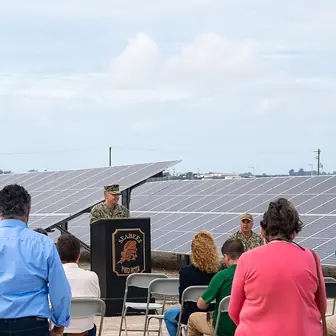
On a sunny spring weekend, the wholesale price of a megawatt-hour in California can slide past zero and keep falling.

The U.S. Energy Information Administration slices the natural-gas year into two neat halves: injection season runs from April 1 through October 31