Society
Response for @Epicurean Deal
I can safely say that, of the 400+ people I follow on Twitter, @EpicureanDeal is one of my five favorites (the others: @pkedrosky @robdelaney @zerohedge
This is the largest part of the archive, and it is untidy by inheritance: the column published a great deal without choosing a heading for it, and that rubrication has been preserved rather than invented after the fact. What is filed here includes an interview with Robert Shiller, a review of Nate Silver’s The Signal and the Noise, a guide to the presidential betting market, a note on Mosler economics, four reading lists, and a run of short pieces on Libya, the Federal Reserve, OpenTable, 3-D printing and Las Vegas.
Re-filing it would mean deciding, years later, what the author meant to call each piece. The portal does not do that; it keeps the heading the snapshot carried and points readers at its own sections instead — markets and energy, banks and credit, policy, Housing, World, Society and economy of the gaming market — where new material is written to a stated method. Every address listed below is the one the column published, with its own date and byline.
Finding one particular piece in an index this size is easier from the portal’s own listings than from here: every entry on this page also appears in the newsroom’s dated list of all materials, newest first, and in the section index its subject belongs to. The page is kept because the column’s heading is part of the record and because links made to it still resolve. Addresses, dates and bylines below are the ones the snapshot carried.
I can safely say that, of the 400+ people I follow on Twitter, @EpicureanDeal is one of my five favorites (the others: @pkedrosky @robdelaney @zerohedge
Government As Tough Love An Interview with Robert Shiller Dec 16, 2025 Brandon Adams When we observe people fall from grace, we tend to get a dopamine jolt that can
The title of Brandon’s previous post “The Center Can Not Hold” is ripped from the end of the famous TS Elliot poem The Wasteland .
In 1998’s Shut Up and Deal , Jesse May told you all you need to know about the poker world. My book, 2006’s Broke: A Poker Novel, was an afterword.
I’m posting here a link to a discussion between Freakonomics co-author Stephen Dubner and Nobel Prize Winning Economist Gary Becker conducted on ExpertInsight.com
While many people complain about athletes being overpaid – and certainly the make a lot of money – at least in the case of baseball it would be hard to find too
I’m sure I’ll omit some of my favorites here. The most glaring omission from my earlier lists was The Confederacy of Dunces by John Kennedy Toole.
Continuing the theme of the week, my twenty favorite pieces of fiction….. 1. More Die of Heartbreak. Saul Bellow 2. The Picture of Dorian Gray. Oscar Wilde 3.
1. The Smartest Guys in the Room 2. The Big Short 3. When Genius Failed 4. Liar’s Poker 5. Barbarians at the Gate 6. Den of Thieves 7. Predators’ Ball 8. DotCon 9.
I encourage readers to post their favorite popular economics books in the Comments below.
I should be one of the only people who has read nearly every word on Warren Mosler’s site, www.moslereconomics.com.
There’s been a bit of an uproar and an ensuing series of television interviews and editorials written over the last week about Jalen Rose’s “Uncle Toms” statement
There is a great scene in the Steven Spielberg movie Catch Me if You Can where Leonardo DiCaprio playing the young Frank Abiginale has his “Aha” moment.
I have been told that you shouldn’t short high valuations. Short broken business models instead.
Tomorrow and Saturday, I’ll be attending the Sloan Sports Analytics Conference in Boston – for those of you haven’t heard of it, it’s a conference where stat geeks
Last August Ben Bernanke unofficially announced QE2, known alternately as quantitative easing, seigniorage or laypeople as printing money.

I remember being at Harvard in the basement of Annenberg and watching the war in Iraq begin on FoxNews.
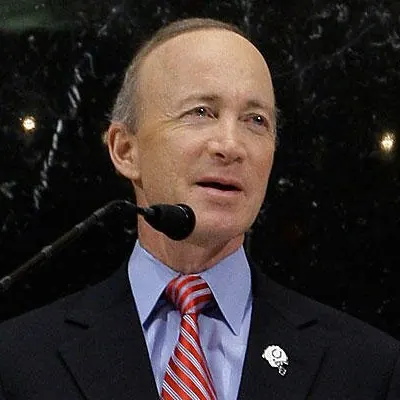
It has been said that without George W. Bush, Obama would not have been president. There is some truth to that.
Back in the spring of 2008, oil prices hit the $80 range, climbing on a seemingly endless ascent from $15/barrel in 2002 (it’s hard to even imagine oil at
Just this past week, we saw an IBM computer beat Ken Jennings on Jeopardy. Over a decade ago, an IBM computer bested Gary Kasparov at chess.
The populist criticism of the International Monetary Fund always ran something like this: since power at the IMF is apportioned based on monetary contribution to
I have to admit, when I first heard about it, the idea of 3-d printing it blew my mind.
http://www.economist.com/node/17800101?story_id=17800101 The Economist struck an unusually pessimistic tone in their recent commentary on Las Vegas, titled “Party
Nate’s book, The Signal and The Noise , immediately goes into the pantheon of great books about risk and prediction.
This October, as the presidential election nears, we witness the strange intersection of the worlds of the gambler and the policy wonk.