Markets
The Oil Chart Is Up, Your Fund Is Down—and It Never Owned a Barrel
A crude oil fund holds no barrel of West Texas Intermediate. It holds futures contracts stamped with expiry dates, and it has to replace them.
Back in the spring of 2008, oil prices hit the $80 range, climbing on a seemingly endless ascent from $15/barrel in 2002 (it’s hard to even imagine oil at $15/barrel now!). At the time, I was leading the energy demand research work at the McKinsey Global Institute and I started getting quite a few emails from partners around McKinsey who wanted to know if the oil price was ever going to stop going up.
Had peak supply actually arrived? We decided to kick off a piece of research on short-term demand (paired with some work on supply) and how it would be affected by higher prices.
What we found may seem a bit obvious: like any other demand for any other good, oil demand reacts to price, at least in pockets. One major area of demand reaction is intuitive – people just reduce their demand for oil intensive goods, namely driving and flying. This reaction tends to happen more where the price signals are stronger. In Europe, gasoline and diesel have been highly taxed since the oil shocks of the 1970s, so the demand that’s left is a lot more resilient to price increases. If you are already paying 5 quid per gallon of petrol, 6 quid probably doesn’t seem like that different. Going from $2.50 to $4 per gallon in the US stings a lot more, because driving as an activity spans income levels. In 2008, the dollar was weakening in currency markets and oil (priced in dollars) and the dollar developed in inverse relationship, meaning that the countries that were really feeling the bulk of oil price increases where the US and any currency pegged to the dollar. Stated another way, the price for oil, which is sold in dollars, was not going up as much in other currencies. So the US was really going to feel this shock harder than other countries. (Indeed if you look at the reductions in driving in the US in 2007/08, this was actually happening). The other way that demand decreases is through a secondary income effect. Basically oil is more of a necessity than other goods and services, people can decrease demand to a certain extent, but they also have to spend more of their income on the necessary usage and reduce expenditures in other areas. Simply stated, US consumers needed to pay more money to oil exporting countries and spend less money on other goods. On an overall basis, higher oil prices dampen economic growth globally, and as a secondary effect this reduces oil demand and helps alleviate price pressure. Given that oil prices had been rising since 2002, many argued that this price reaction – both the direct price effect and indirect income impact – should have happened much earlier. But in fact, other income effects were helping support demand, namely the easy credit situation in the US. We concluded that the demand impact of high prices would come as soon as credit growth slowed down.
Our overall conclusion was that ~$150 a barrel oil over a period of 6-12 months, would create enough demand reaction to foment the price increases and probably reverse them temporarily (there was likely to be some overshooting in demand reduction). We never really got to find out if our analysis was right or not, because although oil did reach nearly $150/barrel that summer, as we all know in October 2008 something else brought oil prices back down to earth.
Our second conclusion from the study was perhaps a bit more frightening – that after the recession ended, oil demand was going to pick up its rate of growth again and that supply was not going to be able to keep up. We reached this conclusion through very careful bottom-up projection of all the components of oil demand, like the number of air trips in China, how many electric vehicles would be on the road in 2020 and how many refrigerators in India would get power from oil-based electricity plants. Based on this analysis, we published in 2009 that a supply/demand imbalance like we saw in 2008 was likely to happen again somewhere between 2024-2014, depending on how deep the recession was and thus how fast demand recovered. Demand is on a faster recovery pace than we had predicted even in our most optimistic scenario; according to the IEA’s statistics, 2010 oil demand jumped 2.8 million barrels per day, which was a huge jump (albeit following declines in demand due to the recession), and prices are quickly following suit. (http://omrpublic.iea.org/currentissues/high.pdf)
$100 a barrel, may seem expensive, especially when we are in the middle of the worst post-war recession. The current uptick in prices also rooted in the political turmoil in the middle East, and thus oil price may also subside in the short-term. But with demand on its current pace we shouldn’t think any relief we get is permanent. It looks like in the next year or two, we may get another real-world experiment to see if our theories about price elasticity of oil in the short-term were right.
If we were right, the US is in for a bugger of a time. One can easily imagine a double dip recession, with US consumers feeling twice the oil price pain due to a likely to be declining dollar (remember oil is priced in dollars) and our addiction to gasoline…
A crude oil fund holds no barrel of West Texas Intermediate. It holds futures contracts stamped with expiry dates, and it has to replace them.
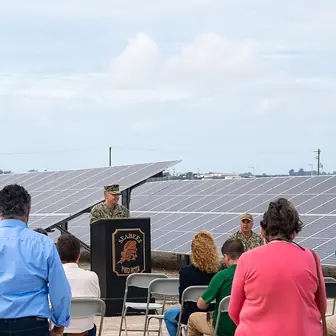
On a sunny spring weekend, the wholesale price of a megawatt-hour in California can slide past zero and keep falling.
The U.S. Energy Information Administration slices the natural-gas year into two neat halves: injection season runs from April 1 through October 31