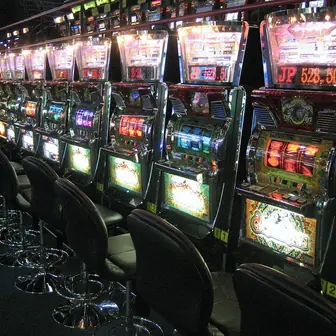
Gaming economy
Who Sets Slot Machine Payback Percentage?
Nevada requires gaming devices to theoretically pay out a mathematically demonstrable percentage of all amounts wagered
Economists are warning that the explosive growth of online gambling is siphoning off increasingly large portions of household spending that would otherwise go to retail, groceries, clothing, dining, and other traditional consumer categories.
The central question is: is online gambling mainly creating new entertainment spending, or is it seriously distorting consumer budgets by substituting for spending in brick-and-mortar businesses?
Reuters reported in September 2024 that the country's online sports-betting boom was possibly diverting funds from consumer spending in other areas. The news agency cited a Santander report noting that family spending on gambling doubled since 2018. Economists linked this boom to disappointing consumer spending growth.
This picture sharpened in September 2026, when Brazil's government news agency Agência Brasil reported new findings from the Center for Research on Macroeconomics of Inequalities (MADE) at the University of São Paulo (USP). MADE estimated that online gambling in 2025 withdrew BRL 120-141 billion from overall economic activity, equivalent to 0.9-1.1% of Brazil's GDP. The study pegged the associated tax revenue loss at up to BRL 54.8 billion. That's a headache for public finances at any time, but even more so as governments emerge from the pandemic with higher debts and deficits.
An earlier report from Global Gaming Insider offered a detailed picture of the substitution effect for Brazil's retail sector. Between January 2023 and March 2026, the economist Carla Beni estimated that online betting diverted around BRL 143 billion from retail under the contribution of National Confederation of Commerce. Among Brazilian bettors, 23% reported scaling back their clothing purchases and 19% cut supermarket spending.
In the Philippines, economist Robert Dan Roces pointed to online gaming contributing around 5% of household spending, or P400 billion in 2024. Roces complained that this amount represents "wallet diversions" that can sap demand for a broad range of discretionary goods including apparel and dining.
More on this is available via best casino bonuses Africa.
For consumers, the gambling shift is more than a matter of diverted retail spending: it also appears tied to wider issues with household finances. The rapid expansion of online gambling appears to be putting pressure on consumer credit. A 2026 paper in Springer found that legalization of online gambling increases credit card debt by 11.9%. Research from Southern Methodist University further classified the spending-risk increase as "distributional," with especially high relative debt exposure evident at lower-income levels. More broadly, NBC News reported that legalization of gambling leads households to cut back their savings, increase credit card balances, and make riskier, smaller investments in the long run.
If online gambling is increasingly snaring consumer spending, why is the impact only now coming into focus? Partly because of the degree of the spike: daily fantasy sports operators alone raised US$1.5 billion of venture funding between 2012 and 2016, much of that capital deployment occurring since 2014. We've seen another major leg up over the past two years due in part to sports betting.
The industry disputes the view that online betting is hurting consumption. The industry points to a retailer's slim sales in the year's largest holiday shopping months. Instead, the gambling industry blames economic factors such as the COVID-19 pandemic, the labor market tightening, and inflation.
But the retail impact of online gambling may be felt well beyond the COVID-19. For retailers, the takeaway from the latest research is the degree to which discretionary spending, once assumed to go toward related brick-and-mortar retail, is increasingly going to online gambling. At a minimum, this represents a resource-intensive driver of new competition for retailers. But the numbers also suggest that gambling could have a negative substitution effect on overall retail spending. If so, it could force the industry to retool its approach to customer targeting and perhaps even product development.
For public finances, the numbers suggest a further loss of resources even as governments responsible for funding social safety nets contend with the negative economic impact of COVID-19, both of which could be worsened by some of the increased credit card debt among lower-income consumers. The gambling industry disputes this impact, suggesting that older growth drivers are largely at fault. The key for governments and retailers alike may be whether this phenomenon is merely accelerated by the latest factors, or substantially caused by online gambling itself.
Nevada requires gaming devices to theoretically pay out a mathematically demonstrable percentage of all amounts wagered
Colorado’s sports-betting statute does not wait for the fiscal year to close before it moves money around.

Colorado is phasing out the deduction that lets sportsbooks subtract the cost of free bets from the revenue they report to the state.