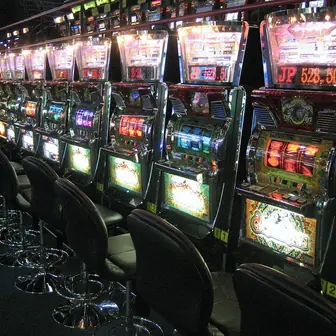
Gaming economy
Who Sets Slot Machine Payback Percentage?
Nevada requires gaming devices to theoretically pay out a mathematically demonstrable percentage of all amounts wagered
On a cool night not long ago, the odds were loud and clear. The screens glowed. The pundits smiled. Money said one side would win with ease. By dawn, the world had flipped. The price was wrong. The “smart” market was not so smart.
If you bet or you study odds, that sting stays with you. How can a market, with cash on the line, miss by that much? It should not. But it can. It does.
This guide shows why crowds work, why they wobble, and how to spot trouble in real time. I keep the words plain. When I use a hard term, I explain it fast. For a deeper, classic map of this field, see a canonical overview of prediction markets.
The idea is simple. If many people guess a hard thing, and we average their guesses, we often get close to truth. One person can be way off. The group, if set right, can be sharp.
But this only works under some rules. People need to think on their own (independence). They need to come from different views and data (diversity). They need a reason to be right (incentives). And we need a fair way to mix their views (good aggregation). This is close to the Condorcet Jury Theorem.
Break any rule and the crowd can fail. In betting markets, we see joint moves, copied takes, high fees, and thin books. Each of these chips away at the core parts that make a crowd wise.
It is easy to price a coin flip. It is hard to price a player’s knee, a late poll, a war scare, or a storm path. These are messy. Facts leak slow. Noise shouts.
And the way a market runs matters. If there are few orders and big gaps between them, the price jumps. If it costs a lot to place a trade or a bet, less truth flows in. This is what pros mean by “liquidity” (enough people and money to trade fast at fair prices). A good intro to how this shapes price is here: market liquidity and price formation.
Here is a quick map of common failure modes. One classic risk is that loud, wrong money can move price and stay wrong for a while. Researchers call this noise trader risk. Keep that in mind as you scan the table.
| Herding / Info Cascades | People copy others; signals are not independent | Prices cluster too tight; sudden swings on talk, not news | Big election nights with strong pundit echo | Stanford Encyclopedia; classic jury theorem notes | Independent models; blind review before line moves |
| Noise Trader Dominance | Irrational flow drowns patient capital | Mispricing holds even after “value” bets | Meme‑style runs in niche props | NBER (De Long et al., 1990) | Deeper limits; lower fees; longer horizon makers |
| Illiquidity + Vig | Thin order book; high house cut | Wide spreads; stale odds after news | Minor leagues; small markets late at night | Central bank research on liquidity; bookmaker math | More market makers; fee cuts; clearer tick sizes |
| Goodhart on the Metric | People aim to look right, not be right | Overconfident odds that later break hard | Media treats odds as truth; feedback loop | Science (Google Flu Trends case) | Audit forecasts; report calibration, not vibes |
| Limits and Bans | Sharp bettors get cut; truth can’t enter price | Books move on small bets; one‑sided lines | Props where max bet is tiny | Regulatory notes and operator T&Cs | Fair, public limits; exchange models where possible |
| Asymmetric Info | Some hold key facts; others guess | Jumps on rare posts; long flat spells | Injury news, private polls, weather ops | Microstructure and event study literature | Better data feeds; time‑boxed info windows |
In a math book, mispricing should fade fast. If odds are off, pros step in, bet size, and move the line back. In life, capital is scarce. Risk hurts. A fund or a bettor can be right and still lose if the crowd stays wrong for a while. Margin calls are real.
That is the heart of “noise trader risk.” Wrong flows can shove price away from fair value and keep it there. If you lean against it too soon, you bleed. If you wait too long, the edge is gone. Hard game.
Fee load makes this worse. In sports, the “vig” (the house cut) is often 4–10%. In niche props it can be more. Thin books and tight limits add more pain. A thin book means there are few orders to meet your bet, so the price can jump on small size. In that case, the line you see is not a clean read on true odds; it is a guess under stress. Also note the legal side. Some “prediction” products blur into regulated space. Read the event contracts and oversight note if you trade those.
Then there is the human echo. When star voices all say the same thing, true or not, we lose independence. Books and exchanges can mirror each other too. Lines drift in packs. It feels safe. It is not always smart.
Not all venues work the same. A bookmaker sets lines and takes the other side. An exchange matches users to users. A book has a margin and can set limits. An exchange charges fees but can show a live order book. These “microstructure” choices shape truth flow. Deep depth and fair spreads pull in real views. Tight limits and high fees push them out.
Academic or research markets act different. They may have small stakes but clean rules, clear goals, and careful users. A classic case is the Iowa Electronic Markets, which ran election contracts with strict caps. Even with size caps, they often did well, in part due to careful design and a focus on learning, not hype.
In short: liquidity begets insight, but only if the set‑up gives both sides room to speak. If we choke one side, or tax all sides too much, the “price” we see is not the world. It is a mirror in fog.
Judgment is not just bias. It is also noise: random spread in our calls from day to day. The same person, same facts, new mood, new call. Teams show this too. That is why checklists, base rates, and post‑mortems help. They damp the random hum.
If you set lines, this matters. If you read lines, it matters too. Calibrate. Track your hit rate. Use simple, fixed rules when you can. A plain read on this idea is here: Noise in human judgment.
Odds look like truth, so media treats them that way. The story then loops back into the market. Traders trade the story. The number gets “managed” to look smart on TV, not to be right in the end. This is Goodhart’s Law in the wild.
We saw a cousin of this in tech. A tool that guessed flu rates from search terms looked great—until it drifted. It tracked what it could game, not the real thing. Read “The Parable of Google Flu.” Markets can fall for the same trap if we praise sharp‑looking moves more than true calls over time.
Markets can be great. In major sports with deep pools, fast data, and low fees, odds move fast and tell you a lot. Clear rules help. A final score is a clean event to price.
Also, trained people with method can beat a loose crowd. Tournaments that track Brier scores (a way to grade forecasts) show that. See the forecasting tournaments evidence. The key is process: base rates, updates, team checks, and honest scorecards.
Watch the spread. If the gap between back and lay is wide, be careful. If lines stay stale after clear news, that is a red flag. If the story swings hard with no fresh facts, step back.
Watch flow. Do a few wallets move the price a lot? Are pundits in tight echo? Are limits cut just when edge might exist? These are signs that truth is not getting in.
Calibrate. Compare venues that do not copy each other. Use your own log. Track your Brier score and the book’s over months, not days. If you see a place that pays slow, moves slow, and caps small, treat its price as weak signal, not gospel.
I also help test betting sites. We check limits, line speed after news, and payout times by hand. If you read Spanish and care about welcome offers, you can see how we review a bono de bienvenida casino. We list terms in plain words and track if they match real play. No tips here are a promise to win. Use this guide to judge market health, not to chase risk.
This piece is a field guide, not a lab proof. Some claims lean on case studies and public notes. Data from books and exchanges is often closed. Results can vary by sport, by season, by law. You should test on your own set and share methods when you can.
Use odds portals to cross‑check lines. Keep a simple sheet of your calls and the odds you saw. Draw a calibration chart once a month. If you model, keep it small and clear. If you do not, use base rates and do not force a bet. The best move is often “pass.”
If you need support, or someone you know does, here is responsible gambling help. Keep your stakes small. Set a stop. Never chase.
There is a kind of wisdom that does not show up on a screen. It is the calm choice to wait. To skip the market that hums with noise. To price your own time and peace. Crowds can be wise. You can be, too. Start by knowing when not to play.
Disclaimer: This article is for information only. No wagering advice is risk‑free. Bet only what you can afford to lose.
Nevada requires gaming devices to theoretically pay out a mathematically demonstrable percentage of all amounts wagered
Colorado’s sports-betting statute does not wait for the fiscal year to close before it moves money around.
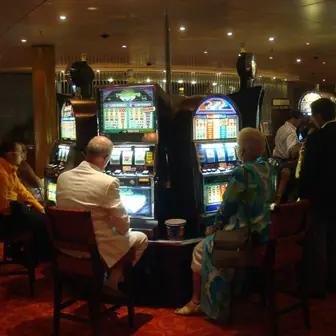
Colorado is phasing out the deduction that lets sportsbooks subtract the cost of free bets from the revenue they report to the state.